

Luxury Red Wine Market Projected to Reach USD 125.52 Billion by 2035 Fueled by Demand for Fine Wine & Luxury Experiences
Luxury Red Wine Market
The luxury red wine market is projected to reach USD 125.52 billion by 2035, driven by rising demand for premium wines and luxury drinking experiences.
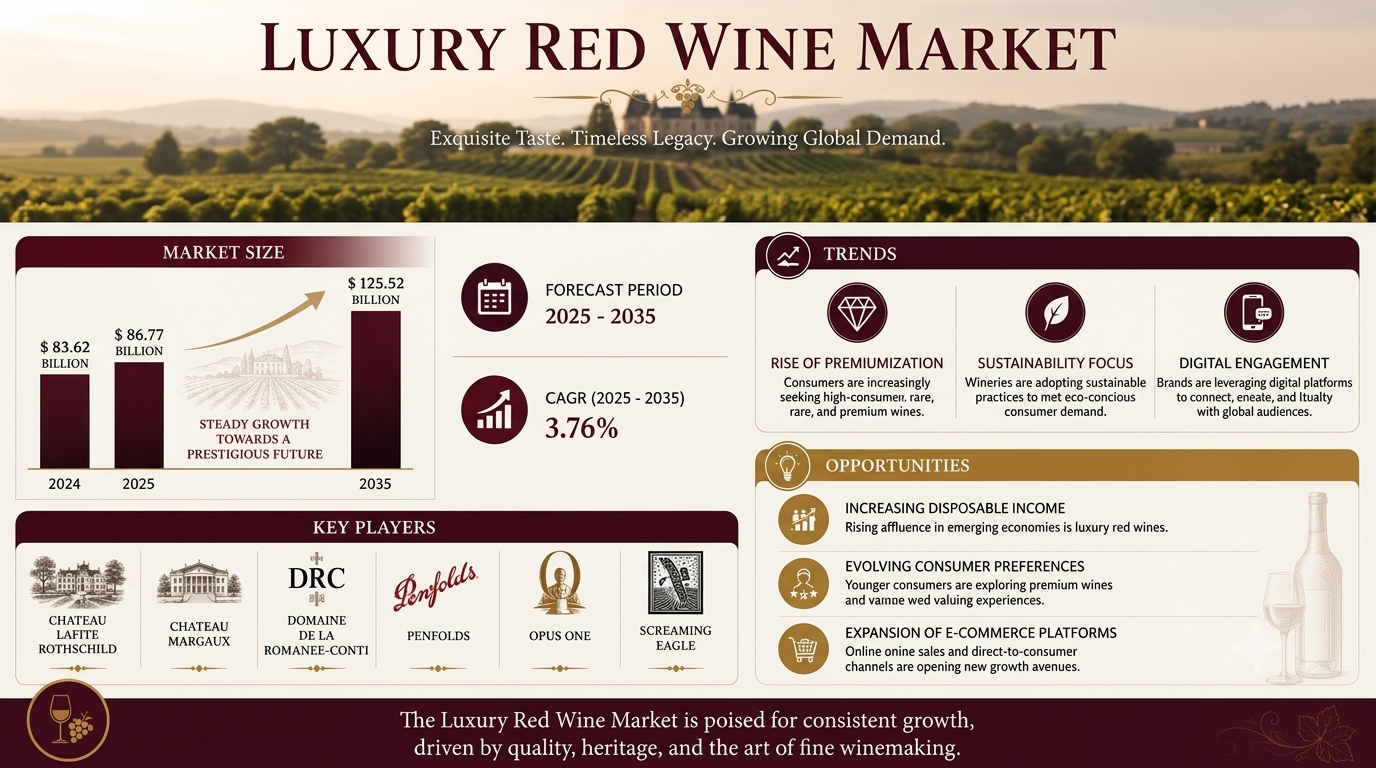
NEW YORK, NY, UNITED STATES, June 26, 2026 /EINPresswire.com/ -- The global Luxury Red Wine Market is witnessing sustained expansion as consumers increasingly gravitate toward premium alcoholic beverages, sophisticated dining experiences, and high-end lifestyle products. According to recent industry analysis, the market was valued at USD 83.62 billion in 2024 and is estimated to increase to USD 86.77 billion in 2025. The industry is projected to attain a valuation of USD 125.52 billion by 2035, registering a compound annual growth rate (CAGR) of 3.76% during the forecast period from 2025 to 2035.Luxury red wine has evolved beyond being a beverage category and has become a symbol of heritage, craftsmanship, and status. Consumers across developed and emerging economies are showing a stronger preference for premium wines that offer authenticity, exceptional taste profiles, and unique regional characteristics. This shift in consumption patterns is supporting consistent market growth and encouraging producers to introduce innovative offerings and sustainable production methods.
Growing Preference for Premium and Experiential Consumption:
One of the most influential factors driving the luxury red wine market is the growing consumer inclination toward premiumization. Rising disposable incomes, urbanization, and changing lifestyle preferences have led consumers to seek products that provide exclusivity and elevated experiences.
Wine enthusiasts are increasingly interested in rare vintages, limited-edition collections, and wines produced in renowned vineyards. Premium wines are frequently associated with fine dining, luxury hospitality, and celebratory occasions, making them an important component of the global luxury goods ecosystem.
Millennials and affluent younger consumers are also contributing significantly to market demand. Unlike previous generations, younger consumers are willing to spend more on products that offer superior quality, storytelling, and artisanal value. The emergence of social media and digital platforms has further enhanced awareness regarding luxury wine brands and regional wine cultures, creating new opportunities for market participants.
Sustainability Emerging as a Key Industry Trend:
Environmental awareness is becoming an important consideration among wine buyers. Consumers increasingly prefer wines produced through environmentally responsible methods, prompting manufacturers to adopt sustainable viticulture practices.
Organic farming techniques, reduced pesticide usage, renewable energy adoption, and eco-friendly packaging solutions are becoming integral components of production strategies. Sustainable certifications and transparent sourcing practices are also gaining significance as consumers seek products that align with their environmental values.
The growing demand for organic and sustainably produced luxury wines is expected to create substantial opportunities throughout the forecast period. Producers that successfully combine premium quality with sustainability initiatives are likely to strengthen their market positions and attract a broader consumer base.
Download Free Sample PDF Copy : – Access A Complimentary Copy of Our Report to Explore Its Content and Insights
https://www.marketresearchfuture.com/sample_request/27118
Innovation and Product Differentiation Strengthening Market Competition:
The luxury red wine market remains highly competitive, with producers continuously investing in innovation to differentiate their products. Wine companies are increasingly focusing on improving aging techniques, experimenting with unique varietal blends, and enhancing product presentation through premium packaging.
Limited-release wines, collector editions, and vineyard-specific labels are becoming popular among enthusiasts and investors. Several wineries are also leveraging digital technologies to engage consumers directly through online wine clubs, virtual tastings, and personalized recommendations.
As competition intensifies, brands are emphasizing storytelling and heritage to establish stronger emotional connections with consumers. The history of a vineyard, the uniqueness of terroir, and the craftsmanship involved in wine production have become important marketing elements in the premium wine industry.
Market Segmentation Analysis:
By Type;
The market encompasses several categories of luxury red wines, each appealing to different consumer preferences and regional tastes. Traditional premium red wines continue to dominate the industry due to their established reputation and extensive consumer acceptance.
Single-vineyard and reserve wines are witnessing notable demand as consumers increasingly seek distinctive flavor profiles and limited production offerings. These premium categories are expected to continue gaining traction among collectors and connoisseurs.
By Style:
Luxury red wines are available in a wide range of styles, from full-bodied and robust varieties to lighter and fruit-forward expressions. Full-bodied wines maintain a strong presence in the market due to their rich flavors and compatibility with gourmet cuisine.
Meanwhile, smoother and more approachable wine styles are attracting younger consumers who are entering the premium wine segment for the first time. The diversity of styles available in the market continues to expand the industry's consumer base.
By Price Range:
The premium pricing structure of luxury red wines contributes significantly to overall market revenue. The industry includes high-end, ultra-premium, and collectible wines that command substantial prices due to limited production and exceptional quality.
Affluent consumers and collectors are increasingly viewing luxury wines as both lifestyle products and alternative investment assets. The appreciation in value of certain rare wines has further encouraged interest in the premium segment.
By Occasion:
Celebratory events, corporate gifting, fine dining experiences, and personal collections represent major consumption occasions for luxury red wine.
Weddings, anniversaries, festive gatherings, and business events continue to drive significant demand for premium wines. Additionally, growing consumer interest in home entertainment and curated dining experiences has expanded opportunities for luxury wine consumption beyond traditional hospitality settings.
By Varietal Blend:
Luxury red wines are produced using various grape varieties and blends that contribute to their distinctive characteristics. Classic varietals and expertly crafted blends continue to attract wine enthusiasts due to their complexity and aging potential.
The increasing popularity of region-specific blends and innovative winemaking techniques is further enriching the market landscape and providing consumers with a broader selection of premium wines.
By Regional Outlook:
Regional diversity remains one of the defining characteristics of the luxury red wine market. Different wine-producing regions offer unique terroir, climatic conditions, and production methods that influence flavor profiles and consumer preferences.
Established wine regions continue to enjoy strong demand, while emerging wine-producing areas are gaining recognition for producing high-quality premium wines that appeal to global consumers.
Regional Analysis:
North America:
North America represents a significant market for luxury red wines due to strong consumer spending and growing interest in premium alcoholic beverages. The region has witnessed increasing participation in wine tasting events, vineyard tourism, and gourmet dining experiences.
The United States remains one of the most important markets for premium wines, supported by a large population of affluent consumers and a thriving luxury hospitality industry.
Europe:
Europe continues to dominate the luxury red wine landscape due to its long-established winemaking traditions and globally recognized wine regions. Countries across the region are home to some of the world's most prestigious vineyards and luxury wine producers.
Strong domestic consumption and substantial export activities contribute to the region's leadership position in the global market. European consumers also demonstrate a deep appreciation for heritage, quality, and authenticity, further supporting premium wine demand.
Asia-Pacific:
The Asia-Pacific region is emerging as one of the most promising growth markets for luxury red wines. Rising disposable incomes, expanding middle-class populations, and increasing exposure to global culinary trends are encouraging premium wine consumption.
Countries across the region are witnessing growing interest in wine education, fine dining, and luxury experiences. Younger consumers and affluent professionals are increasingly incorporating premium wines into their lifestyle choices, creating significant opportunities for market expansion.
South America:
South America is steadily strengthening its position in the luxury wine market due to increasing investments in premium wine production and the growing international reputation of regional vineyards.
The region benefits from favorable climatic conditions and expanding wine tourism activities, both of which contribute to rising demand and production capabilities.
Middle East and Africa:
Although comparatively smaller in market share, the Middle East and Africa region is experiencing gradual growth. Expanding luxury hospitality sectors, premium dining establishments, and rising tourism activities are supporting demand for high-end wines.
The increasing presence of international luxury brands and evolving consumer preferences are expected to generate new opportunities in this regional market.
Key Growth Drivers:
The luxury red wine market is expected to experience consistent growth over the coming years, supported by several evolving consumer and industry trends. Rising disposable incomes and an increasing preference for premium lifestyles are encouraging consumers to spend more on high-quality wines that offer exclusivity and refined experiences. At the same time, a growing appreciation for fine wines, artisanal craftsmanship, and heritage-driven products is strengthening demand across both mature and emerging markets. The expanding popularity of wine tourism and immersive tasting experiences is also introducing more consumers to premium wine brands and regional specialties.
In addition, the rapid growth of e-commerce platforms and direct-to-consumer distribution channels has made luxury wines more accessible to a broader audience, enabling producers to engage directly with customers and enhance brand loyalty. Consumer interest in environmentally responsible products is further driving demand for organic and sustainably produced wines, prompting manufacturers to adopt eco-friendly practices.
Industry Challenges:
Despite its positive outlook, the luxury red wine market faces several challenges that could influence growth dynamics.
Climate change remains a significant concern for vineyards, as changing weather patterns and extreme conditions can impact grape quality and production volumes. Supply chain disruptions, regulatory complexities, and fluctuating raw material costs may also affect profitability.
Additionally, the premium nature of luxury red wines makes the industry somewhat sensitive to economic uncertainties and changes in consumer spending patterns. Producers are therefore focusing on operational efficiency and diversification strategies to mitigate potential risks.
Competitive Landscape:
The global luxury red wine market features several prominent producers renowned for their heritage, craftsmanship, and premium product portfolios. Leading companies continue to invest in innovation, sustainable practices, and international market expansion to strengthen their competitive positions.
Key companies operating in the market include:
▪️Chateau Lafite Rothschild (France)
▪️Chateau Margaux (France)
▪️Domaine de la Romanee-Conti (France)
▪️Penfolds (Australia)
▪️Opus One (United States)
▪️Screaming Eagle (United States)
▪️Antinori (Italy)
▪️Marchesi di Barolo (Italy)
▪️Bodegas Vega Sicilia (Spain)
These companies emphasize quality, exclusivity, and brand heritage while continuously adapting to evolving consumer preferences and sustainability expectations.
Future Outlook:
The future of the luxury red wine market remains promising as consumers increasingly seek premium products that offer authenticity, craftsmanship, and memorable experiences. The growing intersection between luxury consumption, sustainability, and digital engagement is expected to redefine the industry's competitive landscape over the coming decade.
As producers continue to invest in innovation and environmentally responsible practices, the market is anticipated to maintain stable growth and reach USD 125.52 billion by 2035. Premium wines are expected to remain an integral component of the global luxury goods sector, supported by expanding consumer appreciation for quality, heritage, and exceptional wine experiences.
FAQs?
What is the projected market size for the Luxury Red Wine Market by 2035?
The market is projected to reach 125.52 USD Billion by 2035.
Who are the key players in the Luxury Red Wine Market?
Prominent players include Chateau Lafite Rothschild, Domaine de la Romanee-Conti, and Screaming Eagle.
Which varietal blends are gaining traction in the Luxury Red Wine Market?
Bordeaux Blends are particularly prominent, with a valuation range of 25.0 to 40.0 USD Billion.
Read Our Related Research Report:
Commercial Wine Cooler Market:
https://www.marketresearchfuture.com/reports/commercial-wine-cooler-market-27113
Micro Winery Equipment Market:
https://www.marketresearchfuture.com/reports/micro-winery-equipment-market-27262
Sake and Plum Wine Market:
https://www.marketresearchfuture.com/reports/sake-and-plum-wine-market-37617
Wine Capsule Market:
https://www.marketresearchfuture.com/reports/wine-capsule-market-38429
Sagar Kadam
Market Research Future
+ +1 628-258-0071
email us here
Visit us on social media:
LinkedIn
Facebook
YouTube
X
Legal Disclaimer:
EIN Presswire provides this news content "as is" without warranty of any kind. We do not accept any responsibility or liability for the accuracy, content, images, videos, licenses, completeness, legality, or reliability of the information contained in this article. If you have any complaints or copyright issues related to this article, kindly contact the author above.
